Otago real estate agents: how to compare and choose the right agent
Choosing between Otago real estate agents should not come down to the biggest billboard, the highest appraisal or the first person who calls you back. Otago covers very different property markets, from Dunedin city homes and student flats to Central Otago lifestyle blocks, Queenstown Lakes holiday properties, coastal homes and rural townships. The right agent should understand your location, your property type and the buyers most likely to compete for it.
TL;DR
Start by comparing Otago real estate agents who have sold similar properties in your area, not just agents with the most advertising.
Check the agent’s licence on the REA public register before you sign an agency agreement.
Read the Settled guide to selling with an agent so you understand appraisals, commission, marketing costs and agency agreements.
Review Settled’s guide to methods of sale before accepting advice on auction, deadline sale, tender, negotiation or advertised price.
Otago is not one single market. Dunedin, Central Otago, Queenstown, Wānaka, Waitaki and Clutha can all need different selling strategies.
To make your shortlist easier, use My T op Agent to find your top local agent and compare suitable options before you list.
What good Otago real estate agents should help you understand
A good local agent should do more than tell you what your home might sell for. They should explain why that price range is realistic, who is active in your area, how your property compares with recent sales, and which method of sale gives you the best chance of attracting serious buyers.
In Otago, local knowledge matters because the region is so varied. A character home in Dunedin, a lakeside property in Wānaka, a lifestyle block near Alexandra and a family home in Ōamaru will not attract exactly the same buyers. The marketing, pricing and negotiation approach should reflect that.
When comparing agents, look for someone who can clearly answer three questions: what have they sold nearby, how did those properties perform, and what would they do differently for your home? If the answers are vague, keep looking.
Otago property markets are local, not one-size-fits-all
Dunedin
Dunedin has a wide mix of property types, including family homes, student rentals, character villas, hill suburbs, coastal homes and investment properties. A strong Dunedin agent should understand suburb-level buyer behaviour, school zones, rental demand, older housing stock and presentation issues that can affect buyer confidence.
Sellers in Dunedin should ask for recent sales from the same suburb or a genuinely comparable area. A result in St Clair may not tell you much about North East Valley, Mosgiel, Māori Hill or South Dunedin.
Central Otago
Central Otago includes towns and local markets such as Alexandra, Cromwell, Clyde, Roxburgh, Ranfurly and surrounding lifestyle areas. Buyers may include locals, retirees, families, investors and people relocating for lifestyle reasons.
An agent working in Central Otago should be able to talk about land size, outdoor living, town access, heating, garaging, sheds, irrigation where relevant and the appeal of the wider lifestyle. For lifestyle properties, you want someone who knows how to explain the practical details buyers care about, not just someone who can list a house online.
Queenstown and Wanaka
Queenstown and Wanaka often attract a wider buyer pool, including out-of-town buyers, holiday-home buyers, investors and higher-value residential purchasers. These markets can be more sensitive to timing, presentation, lending conditions and buyer confidence.
If you are selling in Queenstown Lakes, including Queenstown or Wanaka, ask the agent how they manage remote buyers, whether they have access to a relevant buyer database or enquiry list, how they handle premium photography and video, and whether the suggested method of sale suits the current market. The right strategy for a standard Dunedin home may not suit a high-value lakeside or alpine property.
Waitaki
Waitaki includes Ōamaru, smaller townships, coastal areas and rural or lifestyle properties. Local affordability, buyer demand and property type can vary widely. A good agent should understand whether your likely buyer is a local family, first-home buyer, investor, retiree, rural buyer or someone moving from outside the district.
Ask for proof of recent activity in the area. A broad Otago presence is useful, but local results are more persuasive.
Clutha
Clutha, including Balclutha and nearby rural communities, can be more relationship-driven than larger city markets. Local reputation, community knowledge and practical rural understanding can make a real difference.
If you are selling in Clutha, ask whether the agent has sold similar homes, rural properties or lifestyle blocks nearby. You also want to know how they will reach buyers outside the immediate area if the local pool is limited.
How to compare agents before you choose
The strongest Otago real estate agents will be able to explain their recommendation clearly, using local evidence rather than sales talk. Do not be afraid to interview more than one person. A confident agent should expect sellers to compare options.
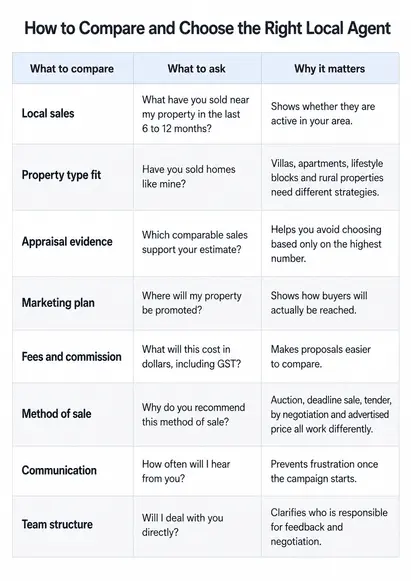
To save time before interviews, you can find local real estate agents through My Top Agent and use your shortlist to ask more focused questions.
Questions to ask Otago real estate agents before signing
Before you sign an agency agreement, slow the process down and ask direct questions. A good agent will welcome them.
Start with licensing and compliance. Ask whether the agent or salesperson is currently licensed, what their licence number is, and whether you can check them on the REA public register. You should also ask which agency agreement you are signing, how long it lasts and what happens if a buyer is introduced during the agency period but buys later.
Next, ask about pricing. A written appraisal should be supported by comparable sales. Do not accept a broad estimate without context. Ask which properties were used, why they are comparable, what current competing listings could affect your result, and what could push the final sale price higher or lower.
Then move to marketing. Ask what is included in the standard campaign and what costs extra. Professional photography, floor plans, video, social media, portal upgrades, print advertising, signage and open homes may all be discussed. What matters is whether each item has a purpose for your likely buyer group.
Finally, ask about negotiation. Who handles offers? How will the agent attract serious buyer interest? What happens if the first offer is lower than expected? How will they keep you informed?
For a deeper preparation list, read My Top Agent’s guide to 23 questions to ask real estate agents.
Understanding agent fees, commission and marketing costs
There is no single standard real estate commission across New Zealand. Fees can vary between agencies, agents, property types and campaign structures. That is why sellers should compare the total cost in dollars, not just the percentage.
Ask every agent to explain commission, administration fees, marketing costs and GST clearly. A cheaper commission is not always better if the marketing is weak or the agent lacks relevant local experience. At the same time, a higher fee should be accompanied by a clear explanation of value.
Marketing costs also need attention. Some campaigns are modest and digital-first. Others include premium photography, video, print, social media, portal upgrades or targeted buyer outreach. A Queenstown Lakes premium campaign may look different from a standard family-home campaign in Dunedin or Balclutha.
Instead of guessing whether a proposal is competitive, you can request a free My Top Agent shortlist and compare local agents before deciding who to interview.
Which type of agent do you need?
Residential agents
Residential agents usually focus on homes, townhouses, units and apartments. They should understand local buyer demand, pricing evidence, open homes, presentation and negotiation. For most standard home sellers, this is the type of agent to start with.
Lifestyle property agents
Lifestyle properties need a different approach. Buyers may care about land size, sheds, fencing, water, access, views, heating, maintenance and how far the property is from schools, shops or work. A lifestyle agent should know how to market both the home and the land.
Rural agents
Rural property can involve more specialist knowledge, including land use, improvements, access, productivity, services and buyer networks. If your property has a genuine rural component, choose someone who has handled similar sales.
Commercial agents
Commercial property, leasing and investment sales should usually be handled by a commercial specialist. The buyer pool, valuation logic, lease details and negotiation process can be very different from residential selling.
Property management and investor-focused agents
If you own a rental property, especially in Dunedin, you may need advice from someone who understands both sales and rental demand. Investors will often ask different questions from owner-occupiers, so the campaign should be shaped accordingly.
Common mistakes sellers make when choosing an agent
One common mistake is choosing the highest appraisal without checking the evidence. A high number can feel exciting, but overpricing can reduce buyer urgency and weaken a campaign. Always ask which comparable sales support the estimate.
Another mistake is choosing the cheapest commission without comparing service. Fees matter, but so do strategy, communication, negotiation skill and local reach. The cheapest option may not produce the best net result.
Sellers also sometimes assume one agent can cover every part of Otago equally well. A strong Dunedin city agent may not be the right person for a Central Otago lifestyle block. A Queenstown specialist may not know the Waitaki buyer pool. Local fit should come before brand familiarity.
It is also risky to sign an agency agreement without reading it carefully. Make sure you understand the term, commission, marketing costs, cancellation conditions and what happens if a buyer is introduced during the agreement.
If you do not want to contact every agency yourself, My Top Agent can help you find suitable local agents based on your property and location.
Step-by-step checklist before you list
Use this checklist when speaking with Otago real estate agents so you can compare them fairly.
1. Decide whether you need a residential, lifestyle, rural, commercial or property management specialist.
2. Shortlist agents with recent sales near your property.
3. Check each agent’s licence on the REA public register.
4. Ask for a written appraisal with comparable sales.
5. Compare the recommended method of sale.
6. Ask what is included in the marketing campaign.
7. Get commission, administration fees and marketing costs in writing.
8. Ask whether quoted costs include GST.
9. Interview more than one agent where practical.
10. Read the agency agreement carefully and consider independent legal advice before signing.
11. Choose the agent with the strongest local fit, not just the highest appraisal.
Before you commit, use My Top Agent to compare suitable local agents and prepare a practical shortlist for your interviews.
FAQ
Q: How do I find the right Otago real estate agents?
A: Start with agents who can show recent sales in your town, suburb or property category. Check their licence, compare appraisals, ask about marketing and interview more than one person where possible.
Q: Should I choose the agent with the highest appraisal?
A: Not automatically. A high appraisal should be backed by comparable sales and a clear strategy. If one appraisal is much higher than the others, ask why.
Q: Are Dunedin agents different from Central Otago agents?
A: Often, yes. Dunedin agents may be stronger with city homes, investment properties, student rental areas and family suburbs. Central Otago agents may have more relevant experience with lifestyle properties, smaller-town buyers and relocation demand.
Q: How do I check if a real estate agent or salesperson is licensed?
A: Use the REA public register to check whether an agent or salesperson has a current licence. It is a simple step that every seller should take before signing an agency agreement.
Q: What should I ask about commission?
A: Ask for the commission in dollars, whether GST is included, whether administration fees apply, what marketing costs are extra and when commission becomes payable.
Q: Do I need a local agent?
A: For most sellers, yes. Local experience helps with pricing, buyer targeting, marketing and negotiation. The agent should be able to show relevant sales close to your property.
Final takeaway
Choosing an agent in Otago should come down to local proof, clear advice and a marketing plan that fits your property. Check the agent’s licence, compare recent sales and understand the fees before you sign.
Ready to make a confident shortlist? Find your top local agent with My Top Agent before you list.
